
Foundation Surface Habitat
LUNAR
Category
Space Architecture
Expertise
Human-Centered Space Habitats
Orbital & Planetary Infrastructure Concepts
Interior Architecture for Space Systems
Prototyping, Simulation & Testing
Visualization, Communication & Design Research
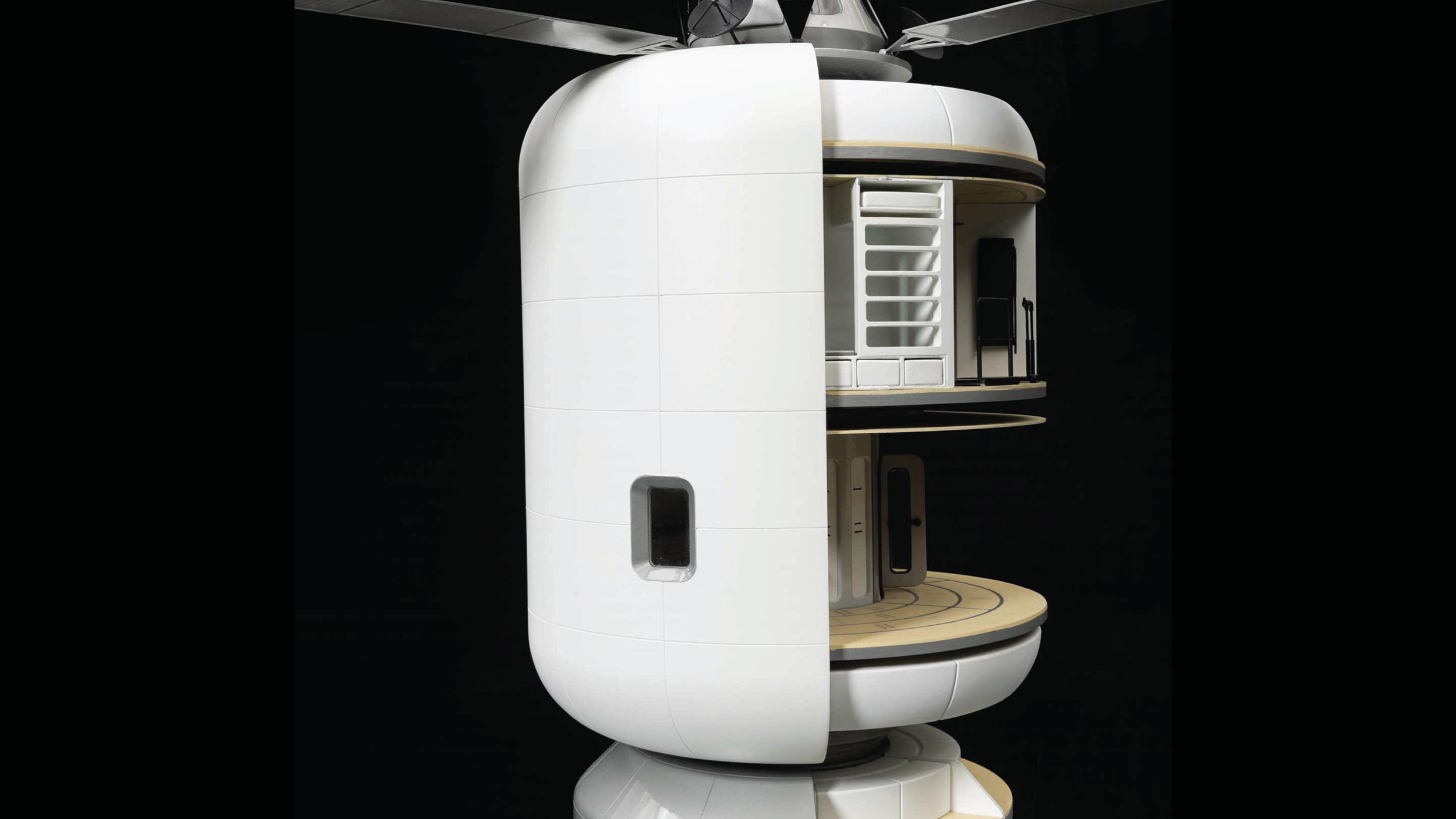
The Foundation Surface Habitat (FSH) is conceived as a permanent, vertically organized lunar outpost that establishes a stable architectural foothold on the Moon.
The Foundation Surface Habitat (FSH) is conceived as a permanent, vertically organized lunar outpost that establishes a stable architectural foothold on the Moon.
Category
Space Architecture
Expertise
Human-Centered Space Habitats
Orbital & Planetary Infrastructure Concepts
Interior Architecture for Space Systems
Prototyping, Simulation & Testing
Visualization, Communication & Design Research
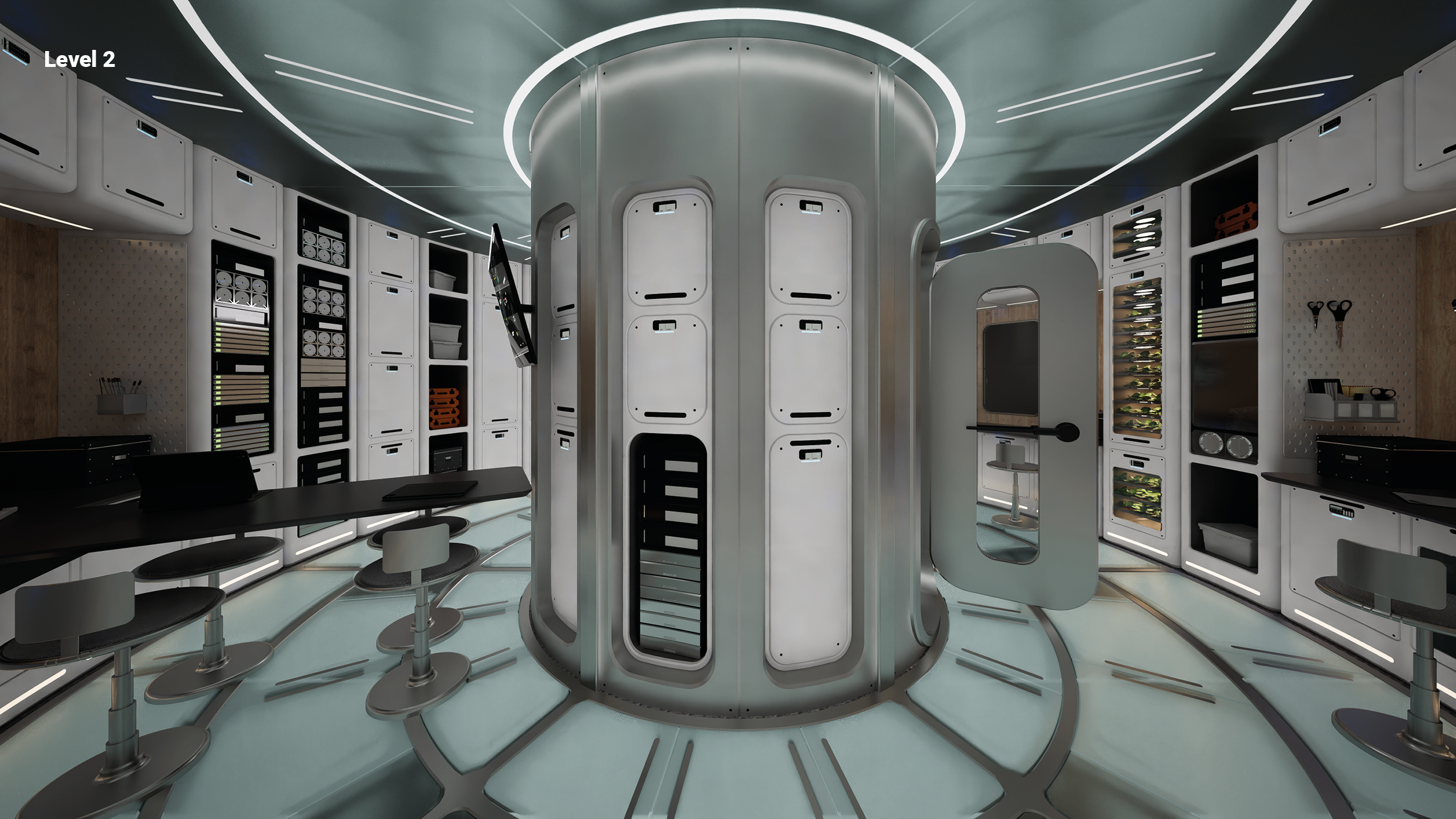
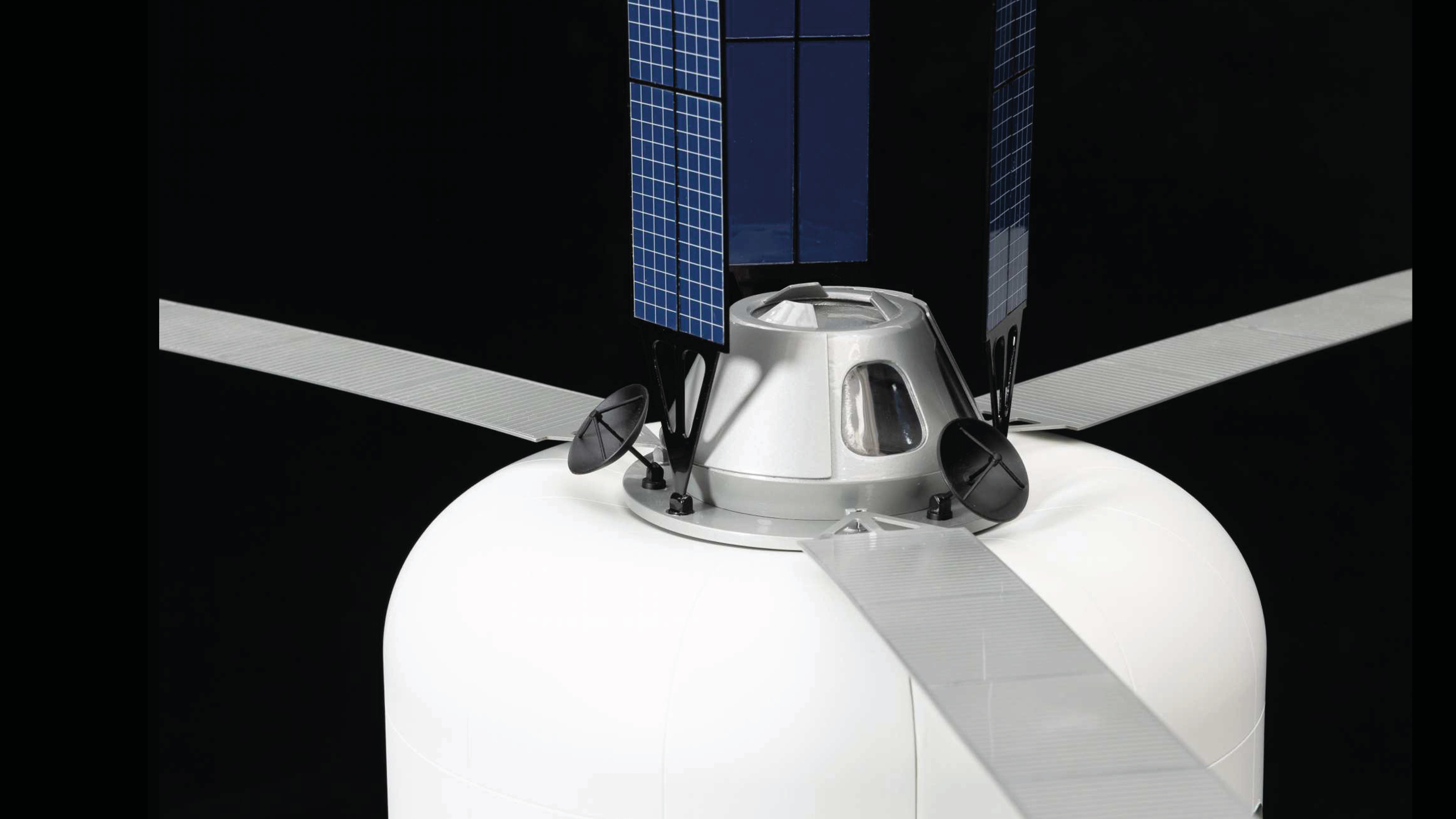
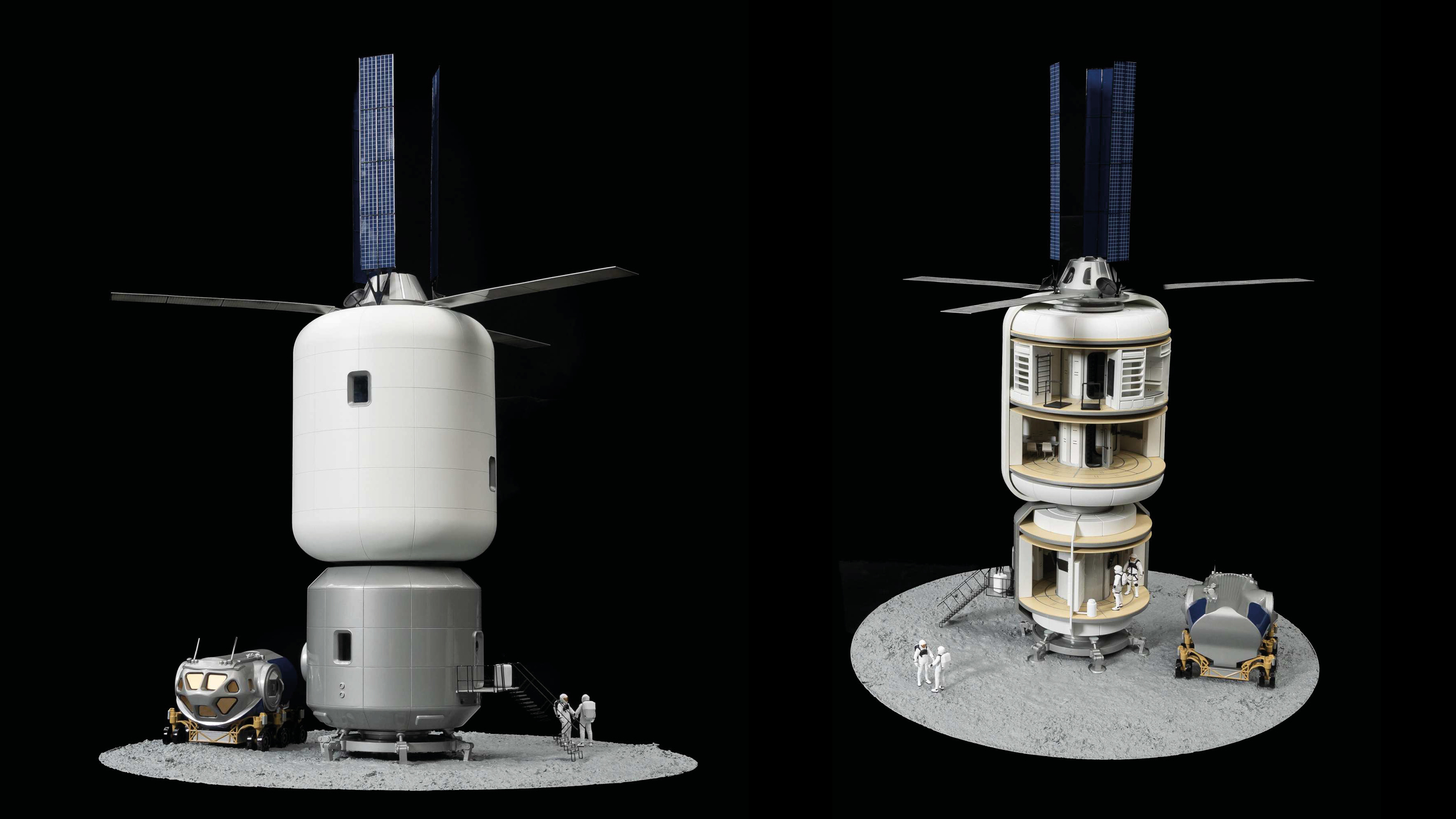
Rather than functioning as a temporary lander, the FSH is designed as foundational infrastructure—anchored to the lunar surface and capable of supporting sustained human presence. Its cylindrical, tower-like form optimizes structural efficiency while reducing exposure to radiation, micrometeoroids, and abrasive lunar dust, signaling a shift from mission-based hardware to true extraterrestrial architecture.
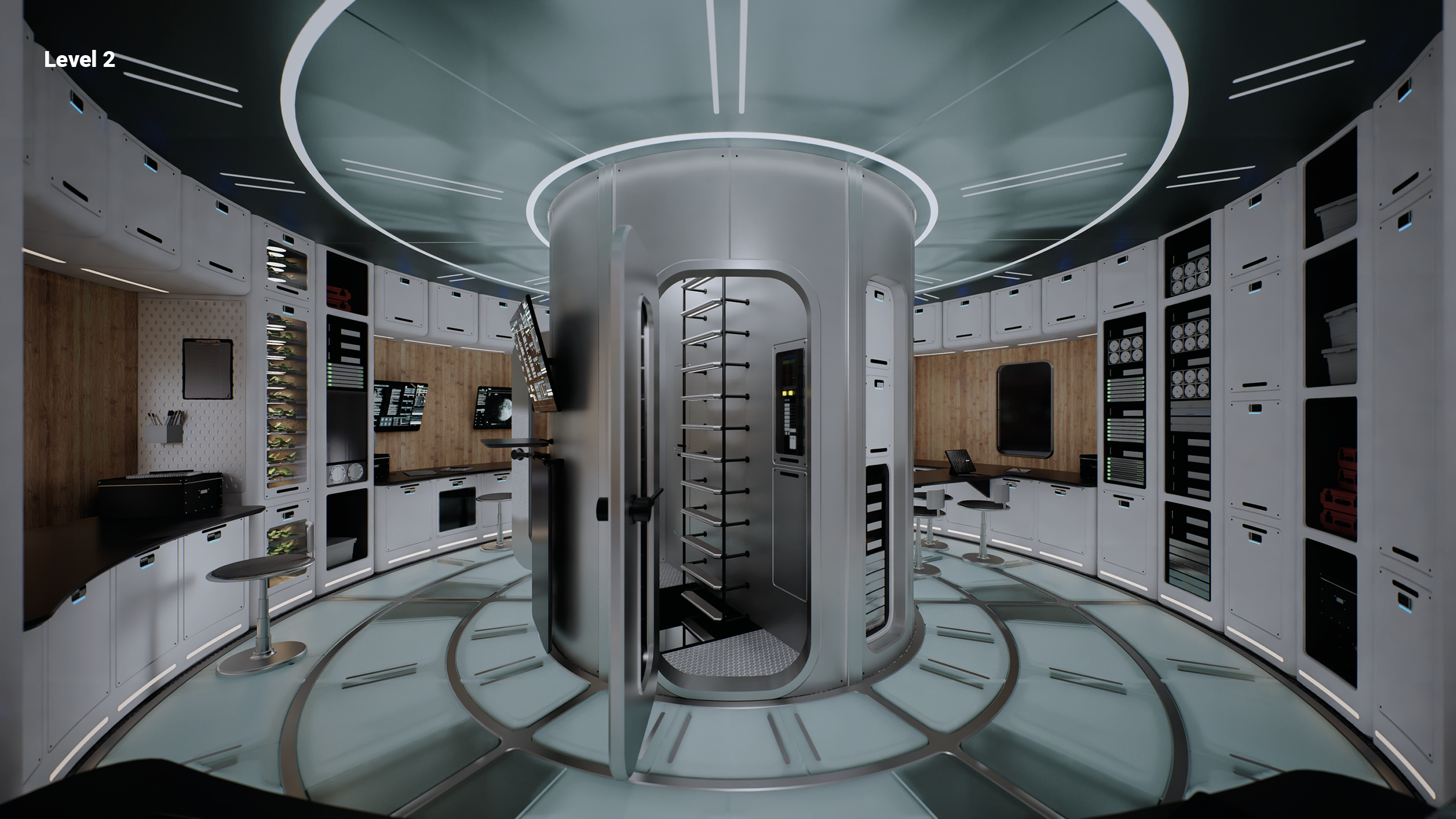
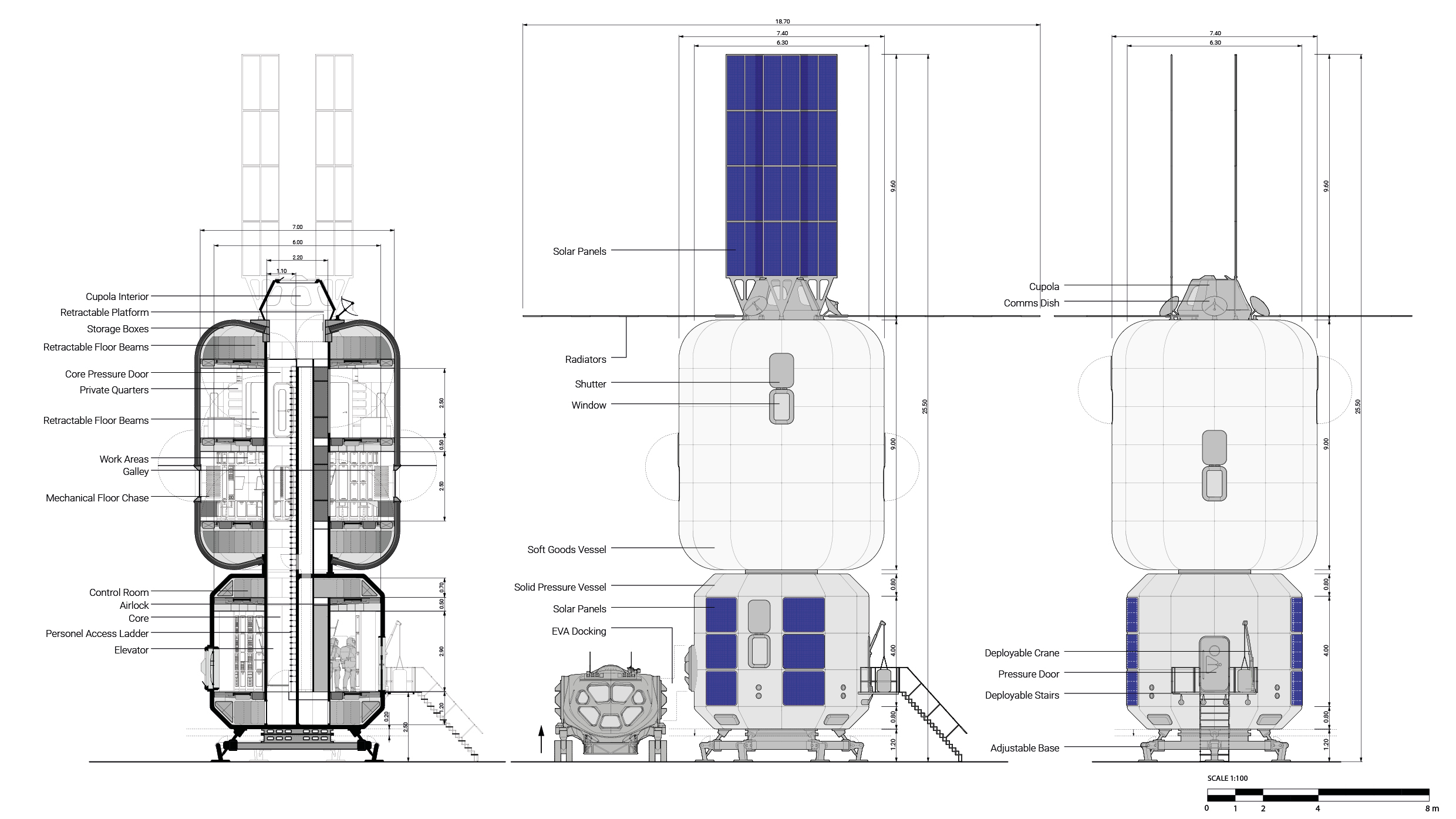
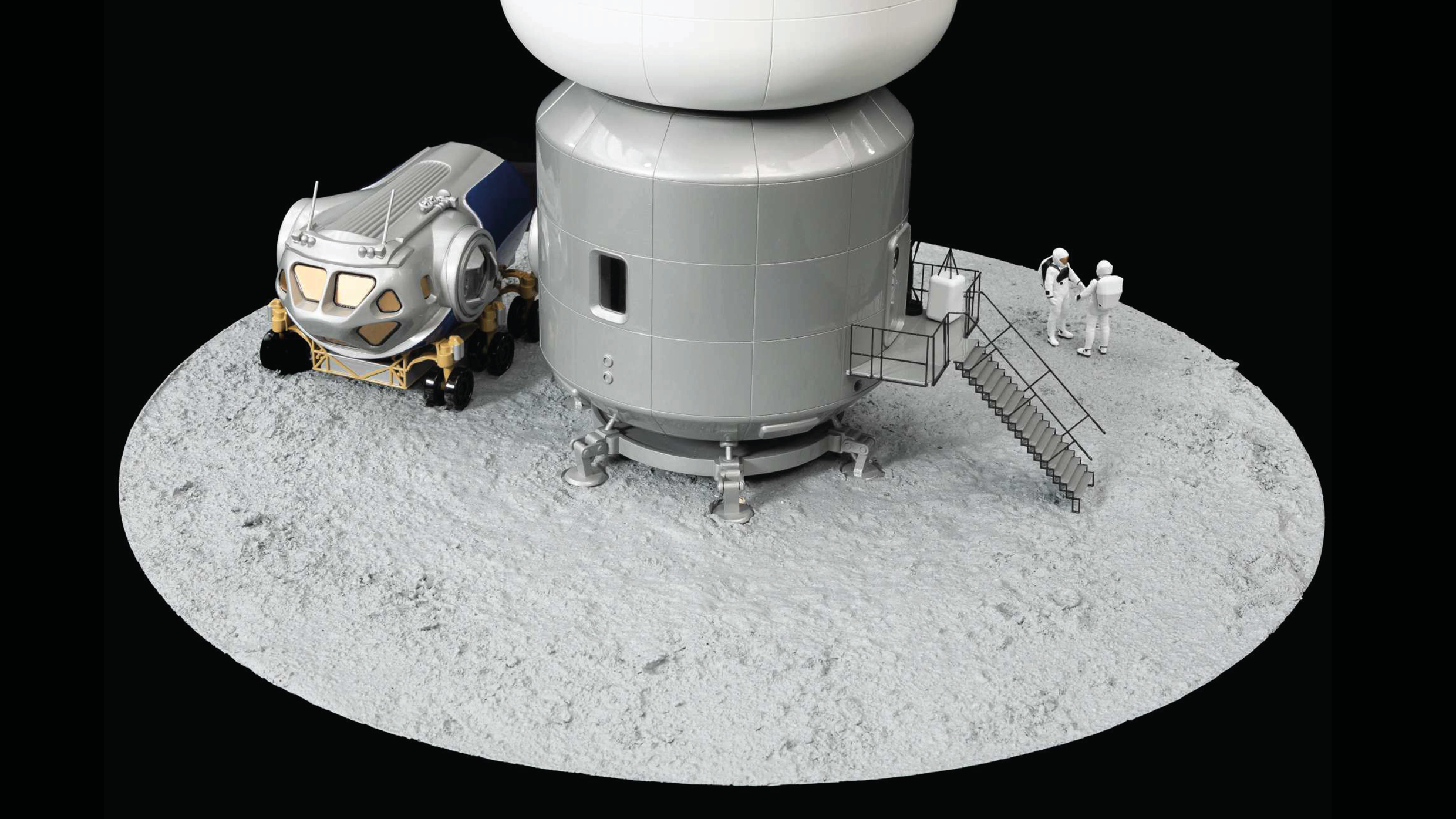
At the surface, the FSH prioritizes operational resilience and logistical clarity. The lower levels interface directly with the regolith, accommodating EVA access, mechanical systems, and surface circulation for rovers and equipment. By concentrating high-wear, mission-critical functions at grade, the design protects the primary pressurized volumes above while enabling efficient day-to-day operations. This separation reinforces safety, simplifies maintenance, and supports long-term durability in the Moon’s extreme environment.
“The Foundation Surface Habitat represents a shift from visiting the Moon to building on it—an architecture that turns exploration into permanence and the lunar surface into a place for sustained human life.”
— Client Testimonial
Location:1411 Broadway New York, NY 10018
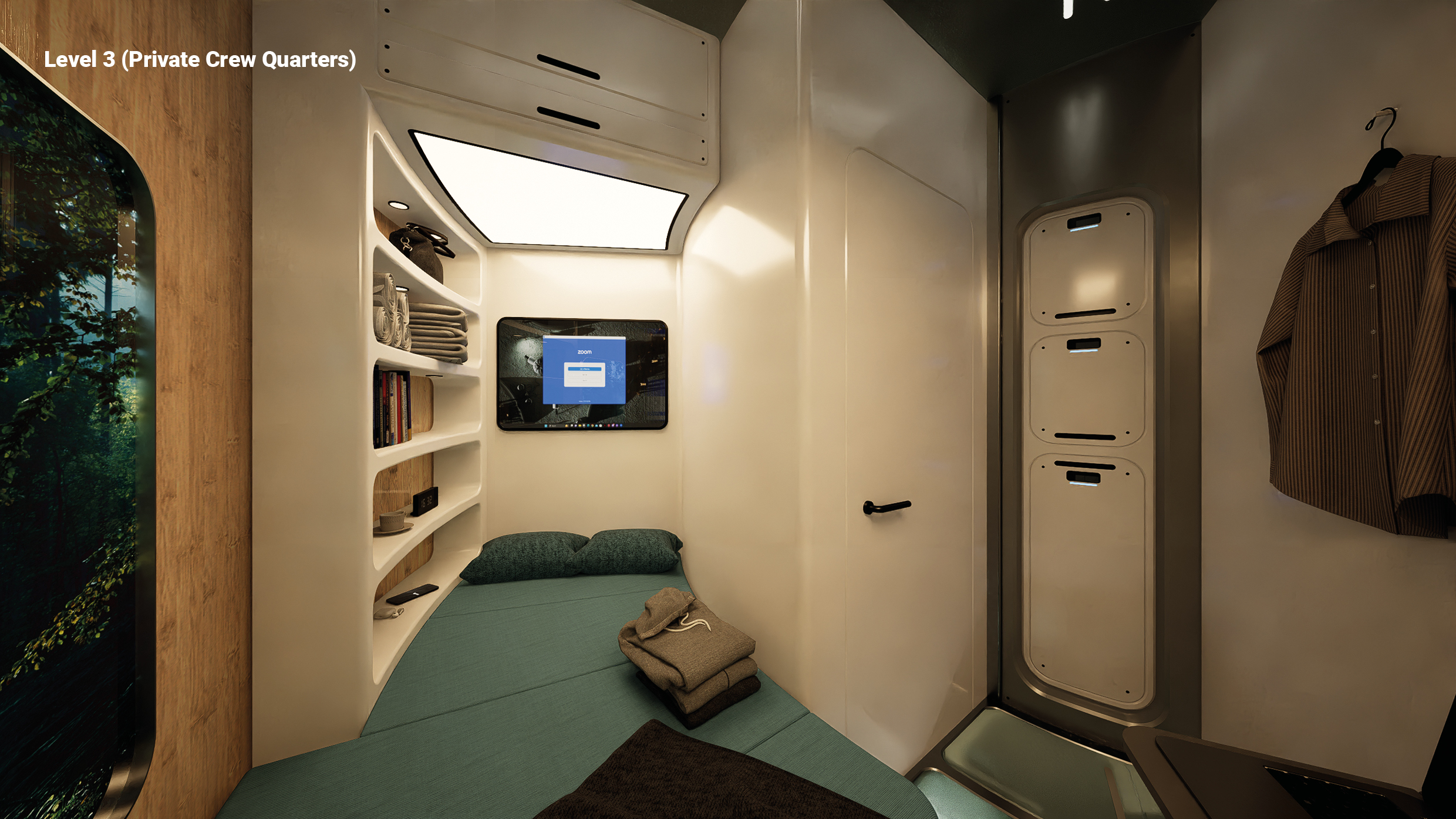
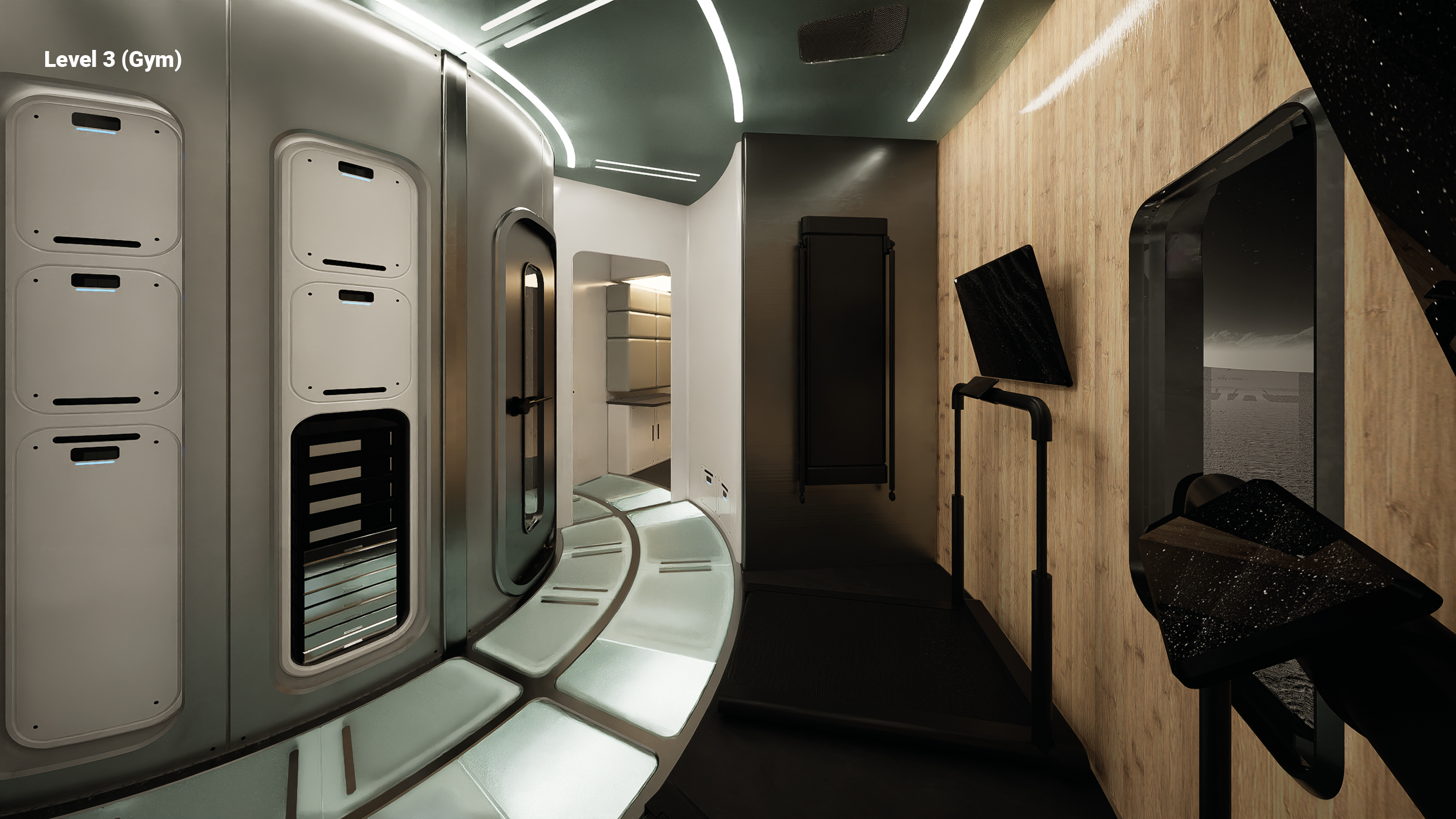
Above, the primary pressurized habitat volume provides space for living, working, and mission support activities. The elevated configuration minimizes dust intrusion and thermal fluctuation while improving internal environmental control. Carefully positioned apertures offer limited but meaningful visual connection to the lunar landscape, supporting crew orientation and psychological well-being without compromising structural integrity. Internally, the FSH emphasizes clarity, modularity, and human-centered spatial organization suited for extended habitation.
Surrounding infrastructure—including deployable solar arrays, lighting towers, and service platforms—extends the habitat into the landscape, transforming it into a central node for future growth. The Foundation Surface Habitat is intentionally scalable, designed to support additional modules, shared systems, and expanded surface networks over time. As its name suggests, the FSH is not an endpoint but a beginning: a robust architectural foundation for long-term exploration, research, and settlement on the Moon.
The Foundation Surface Habitat (FSH) establishes a permanent, scalable foothold on the Moon—transforming lunar habitation from a temporary mission asset into enduring surface infrastructure.

Partner with us.
Join our team.
Newsletter
SOCIAL
PODCAST


SOCIAL
PODCAST
Daniel Inocente Architecture © 2026 | Terms | Privacy Policy