The Intelligent Home: How AI, sensing, automation, energy systems, and responsive architecture will transform residential design.
How AI, sensors, automation, and home energy systems affect residential design, and what owners should plan for comfort, privacy, resilience, and long-term use.

An intelligent home uses information about its occupants, indoor conditions, equipment, and available energy to adjust how the building operates. Sensors provide observations; controls translate those observations into actions. Automation can follow a fixed schedule or rule, while more advanced systems can use forecasts and learned patterns to anticipate demand. The architectural opportunity is to coordinate these capabilities with the rooms, envelope, services, and daily routines they support.
For an owner planning a residence or residential development, this changes decisions well before devices are purchased. Window orientation affects what automated shading must accomplish. Equipment selection affects which operating adjustments are possible. Electrical distribution determines which loads can be managed or backed up. Wall construction, access panels, and service routes influence whether a failed component can be replaced without damaging finished work.
The most useful intelligent home is designed around clearly stated responsibilities: what it should do automatically, what residents can change, and what continues working when a connection or component fails. AI can expand the range of decisions a control system can evaluate, but the building still needs a coherent physical design and an understandable operating strategy. Owners should establish those conditions before committing to a platform or an extensive equipment package.
Start with the building’s environmental demands
The building envelope establishes the conditions that heating, cooling, lighting, and shading systems must manage. An owner should therefore review orientation, glazing, insulation, air leakage, room depth, and exterior shade alongside the proposed controls. Evaluate how the building behaves through representative seasons and occupied periods before deciding which functions need automation.
Honda Smart Home at UC Davis offers an instructive precedent. The university’s opening account describes a demonstration residence combining passive design with energy management, solar generation, and electric transportation. Its window orientation, insulated construction, and attention to local weather formed part of the strategy from the beginning. The project illustrates the value of developing architectural and technical decisions together; its opening projections should not be treated as measured savings for another property.
The Living Future case study records Zero Energy certification and describes north-facing clerestory daylighting, southern overhangs, and an automated west-facing shade. These are distinct responses to different exposures. The same record describes lighting controls with wall-button overrides, showing that automation and direct resident control can coexist within a coordinated design.
A hypothetical New York townhouse renovation presents different constraints. Neighboring buildings may limit solar access, existing walls may restrict service routes, and street-facing windows may require a careful balance between daylight and privacy. Ask the architect to identify which conditions can be improved physically and which require active management. A control proposal should be evaluated against that specific building, rather than transferred from a detached demonstration home in California.
This review also helps allocate the budget. Compare additional control complexity with changes to the opening, shade, or room arrangement that might reduce the underlying problem. Request a documented reason for each automated function and identify the outcome it is intended to improve.

Honda Smart Home combines architectural measures with coordinated energy systems in a residential demonstration project at UC Davis. Credit: American Honda Motor Co., Inc. Official project image gallery.
Give every sensor a defined purpose and response
A sensor becomes useful when its information leads to an appropriate decision. For each proposed measurement, establish what is being observed, where the device belongs, which action may follow, and how a resident or maintenance provider can recognize a fault. This is particularly important when readings will trigger equipment automatically.
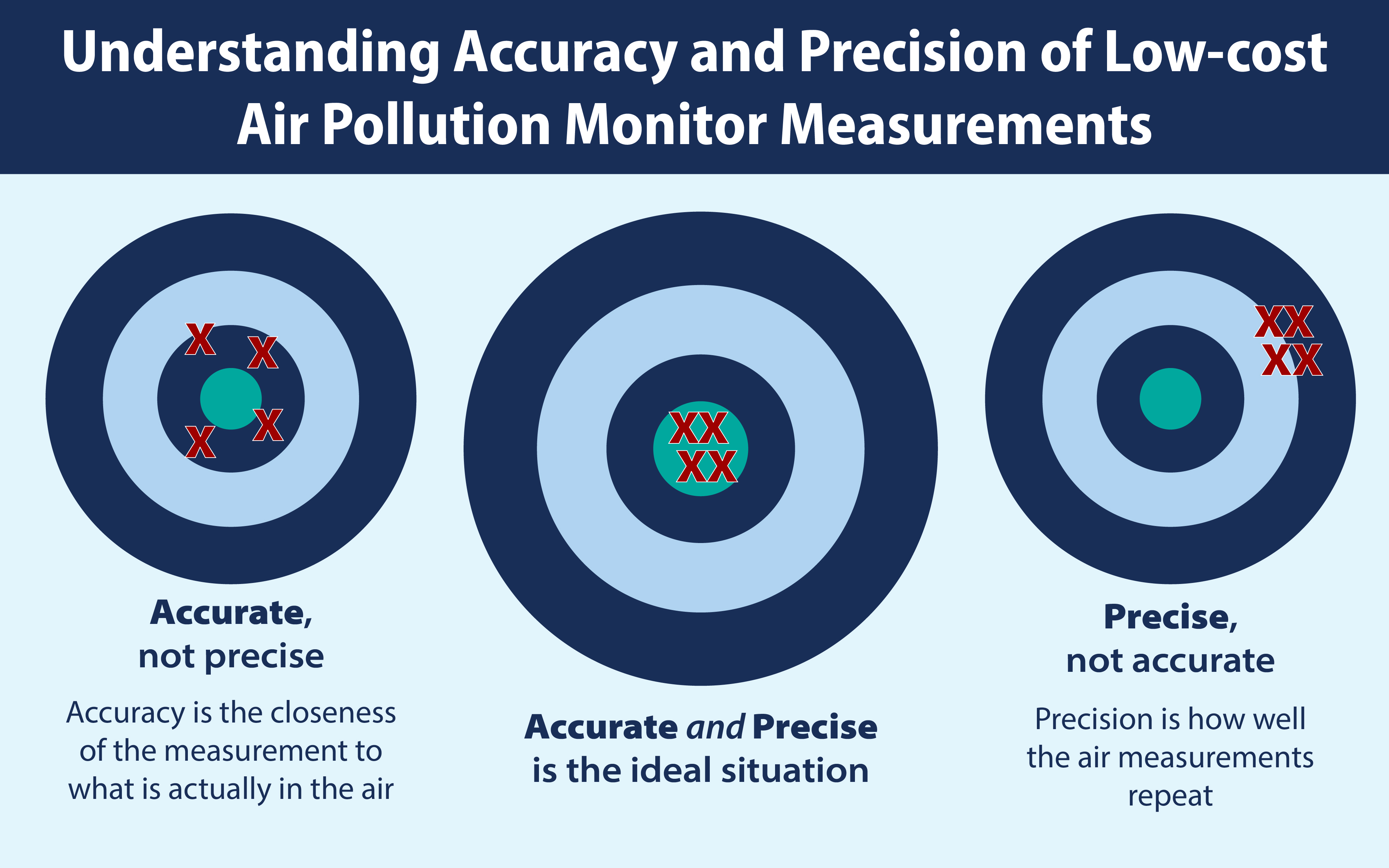
The EPA’s guidance on indoor air pollution monitors explains that these devices measure selected pollutants or environmental conditions, rather than provide a complete assessment of indoor air quality. Their performance can be affected by placement, temperature, humidity, and age. A favorable reading from one instrument cannot establish that every relevant contaminant is absent.
For a residential project, the design team should prepare a sensor-location plan with the same care given to thermostats and lighting controls. Review it against furniture, windows, supply outlets, and the manufacturer’s instructions. A concealed location that looks tidy on an elevation may be inappropriate for the intended measurement. Ask how readings will be checked at installation and what maintenance or replacement the device requires.
The response needs equal attention. An air-quality alert should lead to an understood investigation or operating action. An automated window-opening proposal should be reviewed against weather, outdoor conditions, security, and the intended ventilation strategy. The mechanical engineer should establish the permitted operating modes and how the system handles conflicting inputs.
Water monitoring presents a similar coordination exercise. If an owner wants automatic shutoff after a suspected leak, the plumbing design must identify the intended valve, the areas it serves, and the means of manual operation. Review false alarms, access for service, and the notification process with the installer. Monitoring should have a named person responsible for responding when the house cannot resolve the problem itself.
Keep environmental monitoring distinct from emergency warning functions. EPA explicitly distinguishes ordinary low-cost air monitor alerts from certified smoke and carbon monoxide alarms. A household dashboard should not imply that its environmental readings replace those protections.

Sensor readings can be consistent without accurately representing the condition being measured. Image shown as an explanation of accuracy and precision. Credit: U.S. Environmental Protection Agency. Original graphic.
Ask AI to solve a bounded operating problem
Owners evaluating AI home automation should ask what decision the software actually makes. A scheduled lighting scene follows predetermined instructions. Model predictive control uses a model and forecasts to evaluate future operating choices. Reinforcement learning adjusts a decision strategy using feedback. A conversational interface may provide a convenient way to request an action, but its fluency does not establish how well the underlying equipment will perform.
A residential heating field study revised in July 2026 compared predictive control and a learning-based controller in one occupied house, with each tested for a month. Both reduced weather-normalized heat-pump energy relative to constant-temperature operation. The learning controller also kept the home cooler and prompted occupant discomfort reports. The manuscript was listed as under review, so its findings should be understood as limited field evidence, rather than a settled result across housing types.
The implication for procurement is to specify the acceptable experience alongside the optimization objective. Ask the team to define comfort limits, permitted adjustments, resident overrides, and behavior when input data is unavailable. If a vendor proposes learning from occupation, establish how the initial adaptation period will be supervised. Request evidence from conditions reasonably comparable to the proposed building and equipment.
Conflicting preferences also require an explicit approach. A household may include someone working at home, someone sleeping during the day, and someone who prefers cooler rooms. The owner should decide which spaces need separate control and which preferences the system may infer. Test how a temporary guest, changed work schedule, or manual adjustment affects subsequent operation.
For an apartment development, consider a limited pilot before repeating a configuration throughout the building. Evaluate the controls with actual residents and maintenance staff, and record the changes required. The useful purchasing question is whether the proposed automation can deliver an agreed outcome with a manageable operating burden.
Design responsive elements as maintainable construction
Responsive architecture changes the physical relationship between enclosure and occupation. Motorized shading, movable screens, and operable roof elements can alter daylight, privacy, and exposure. Their value depends on what those movements make possible in the room and how reliably they can be maintained.
At Sliding House in Suffolk, dRMM designed a movable roof-and-wall enclosure that travels along tracks over separate building elements. Its position changes enclosure, views, and opportunities for open-air occupation. This is a precedent for adjustable architecture; the project documentation does not establish an AI-controlled system or a quantified energy-saving result.
For an owner considering a more conventional automated shade, the architectural questions remain substantial. Where will the motor and power connection sit? How will the assembly be accessed? What happens if the moving component stops halfway? Can the window be cleaned and repaired without dismantling adjacent finishes? Resolve these questions in sections and details before the interior design is finalized.
Review environmental controls together. A shade may affect both glare and access to a valued view. A resident may want to open it temporarily without permanently disabling the programmed sequence. Ask the design team to describe the priority between automatic commands and direct inputs, including when normal operation resumes.
Mockups can help resolve the experience as well as the detailing. Demonstrate movement, operating sound, controls, and the appearance of a partially deployed shade. Evaluate the proposed arrangement from seated and standing positions. For bespoke moving assemblies, include the structural engineer and specialist fabricator early enough to test feasibility before the design becomes dependent on a particular mechanism.

Sliding House uses a movable enclosure to change the relationship between interior rooms, daylight, and open-air space. Architecture: dRMM. Original project and image source.
Coordinate energy timing, capacity, and backup operation
A home energy management system coordinates when equipment consumes electricity and how generation or storage is used. The owner should distinguish several objectives: reducing consumption, reducing the bill, limiting peak demand, and preserving power for an outage. A proposal can perform differently against each objective, so the brief should state their relative importance.
The Department of Energy’s storage guidance distinguishes energy capacity from power capacity. Energy capacity describes how much can be stored, while power capacity describes the rate at which it can be delivered. Storage also involves conversion losses. Consequently, a battery’s advertised stored energy alone cannot establish which household equipment it can operate or for how long under actual conditions.
Ask the electrical engineer to develop the household load plan around the intended equipment and routines. Review heat pumps, cooking, water heating, vehicle charging, and other significant loads together. If some activities can be shifted, establish the allowable delay and the resident’s means of overriding it. A vehicle needed unexpectedly should be included in the operating scenarios discussed with the installer.
Backup operation requires its own design. DOE’s resilience guidance explains that conventional grid-dependent solar systems generally shut down during a grid outage. Supplying a home independently requires an appropriately configured system. Ask for an explicit description of how the proposed equipment isolates from the grid, supplies selected loads, and returns to normal operation.
Decide which spaces and services matter during an interruption before selecting storage. Request scenarios with different starting battery levels, weather conditions, and household demands. Include the power needed by the controls and communications equipment on which the operating plan depends. Annual solar production should never serve as a substitute for this outage assessment.
These decisions affect the physical building. Reserve appropriate equipment locations, maintenance access, cable routes, and replacement paths. For a New York project, have the team establish the applicable building, electrical, fire-safety, and utility review requirements for the proposed installation before treating a location or system as feasible. Account for those findings in the architectural layout and procurement plan.

Home energy management relies on physical equipment and coordinated controls to manage household electricity. Image shows equipment from the Honda Smart Home demonstration project. Credit: American Honda Motor Co., Inc. Official equipment image gallery.
Verify compatibility at the level of the requested function
Interoperability standards are expanding what devices can communicate. In November 2025, the Connectivity Standards Alliance released Matter 1.5, adding camera support, broader coverage for moving closures, and additional energy-management capabilities. The announcement describes standardized exchanges involving electricity tariffs and other energy information. It establishes capabilities within the specification, rather than confirming a particular combination of available products.
Before purchase, ask the integrator to demonstrate the complete proposed sequence using the intended devices and controller. Opening an app and finding a device is a different test from verifying its behavior within a household routine. Confirm the required features, current software versions, additional hardware, account dependencies, and any functions that require a subscription.
A compatibility schedule should distinguish operation within the home from services that depend on an external connection. Specify which lighting, temperature, and shading functions must remain available without internet access. Require a practical demonstration of that condition during commissioning, including the ability to recover normal operation afterward.
Plan the infrastructure around serviceability. Locate network equipment where it can be accessed, powered, and maintained. Coordinate data routes and wireless coverage with the actual construction and device locations. For a renovation, investigate existing routes before assuming that a concealed connection can be added without disturbing valuable finishes.
Define privacy and ownership before collecting household data
An intelligent home needs a clear agreement about who controls its information. Start by identifying the operational purpose of each data stream and whether the same outcome could be achieved with less detailed information. The owner should decide what residents, property managers, installers, and outside service providers can access before the system is commissioned.
NIST’s consumer IoT cybersecurity profile addresses the connected product as a whole, including supporting components and services. Its outcomes cover access control, data protection, software updates, and supporting documentation. It also addresses information about support periods and end-of-support considerations. This provides a useful basis for evaluating procurement proposals, although it is not a substitute for project-specific legal or security review.
Translate those considerations into responsibilities. Identify who administers accounts, approves installer access, receives security notices, and arranges updates. Ask vendors to describe their support commitments and the consequences of a discontinued service. Define a transfer procedure for sale or tenancy change that removes former users and hands control to the next authorized occupant.
In multifamily housing, separate building operations from personal household settings. A resident should receive a clear explanation of the information collected and the choices available. Have counsel evaluate the proposed data practices and applicable obligations. Test the practical process for account recovery and turnover with management staff before residents rely on it.
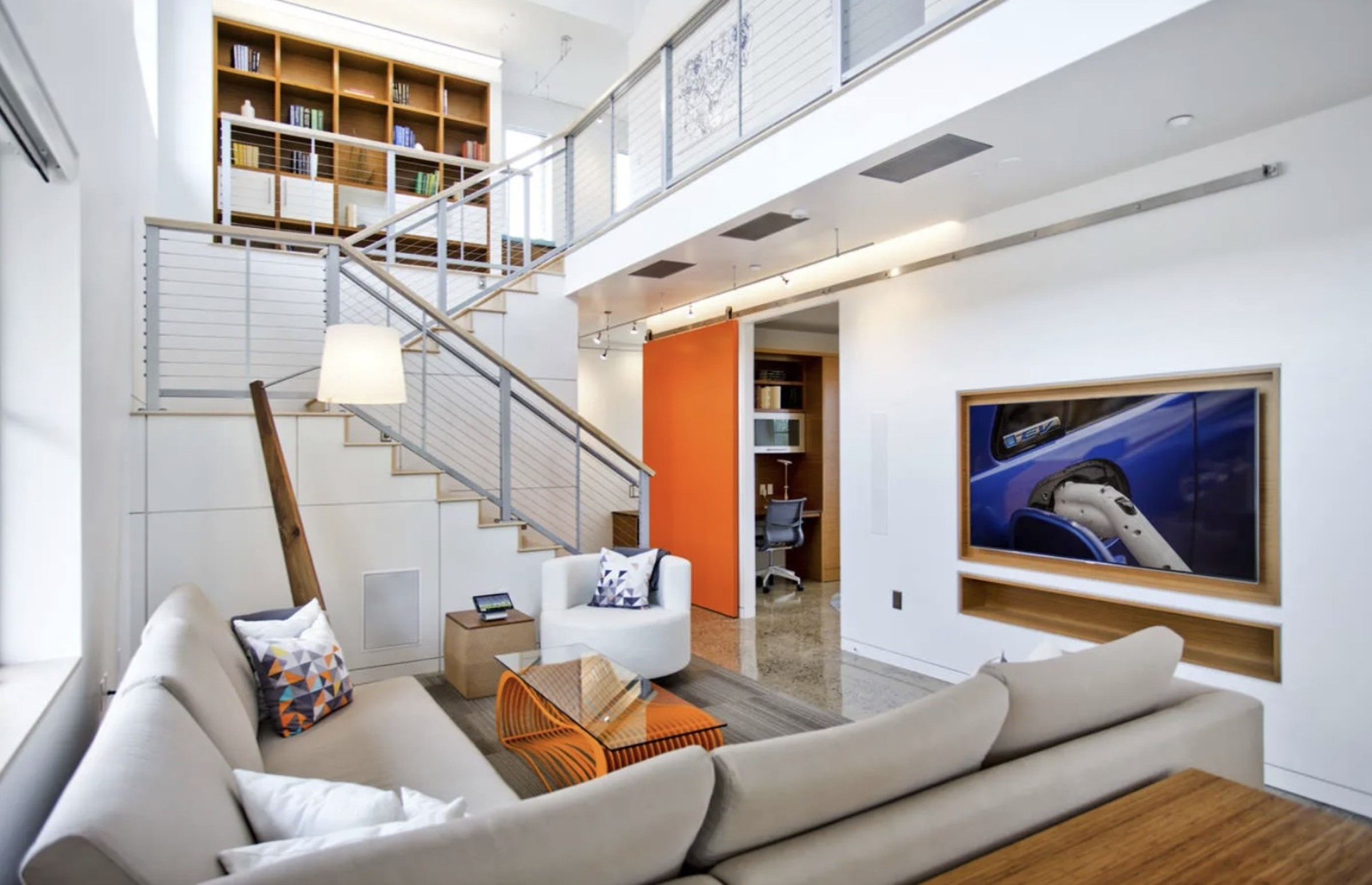
A residential control interface provides a central point for adjusting and monitoring building systems. Image shows the Honda Smart Home control panel. Credit: American Honda Motor Co., Inc. Official control-panel image gallery.
Budget for verification, replacement, and ordinary use
The financial evaluation should cover installation, integration, subscriptions, maintenance, and eventual replacement. EPRI’s Energy Storage 101 emphasizes defining system cost boundaries and evaluating the services and markets available to a project. For a residential owner, the practical lesson is to request a transparent comparison under the actual tariff and operating assumptions. Avoid a single savings estimate that combines different benefits without showing how they were calculated.
Performance verification should distinguish predictions from observations. A 2023 IBPSA conference paper examining Honda Smart Home evaluates monitored performance at multiple time scales, including annual and daily energy balances. This distinction matters because an annual total can obscure periods when demand and available generation differ. Its analysis concerns a particular research house and should not be converted into a general household payback claim.
At handover, require demonstrations of the agreed operating scenarios, understandable instructions, an equipment inventory, and a named support contact. Include residents who will use the home routinely, rather than limiting the demonstration to the purchaser or installer. Test manual adjustments, loss of connectivity, sensor faults, and account recovery under controlled conditions agreed with the relevant specialists.
Schedule a review after occupation to compare the intended experience with actual use. Investigate repeated overrides and unresolved alerts before assuming residents need more training. Those patterns may reveal a mismatch between the sequence and household routines. Record changes so future maintenance providers can understand how the system is configured.
The intelligent home offers its greatest architectural value when it can respond to changing circumstances while remaining understandable and maintainable. Before committing to a technology package, resolve the relationship between the building’s physical design, the decisions its controls are allowed to make, and the people responsible for its operation. That agreement gives future improvements a dependable basis and keeps the residence usable as technology changes.
Sources
University of California, Davis
Honda Smart Home at UC Davis West Village Offers Vision for Zero Carbon Living
UC Davis: Honda Smart Home
Living Future
Honda Smart Home US
Living Future: Honda Smart Home Case Study
U.S. Environmental Protection Agency
Low-Cost Air Pollution Monitors and Indoor Air Quality
EPA: Indoor Air Pollution Monitors
Ozan Baris Mulayim and coauthors, arXiv
Comparative Field Deployment of Reinforcement Learning and Model Predictive Control for Residential HVAC, Version 2
Residential HVAC Field Study, Revised July 2026
dRMM Architects
Sliding House
dRMM: Sliding House
U.S. Department of Energy
Solar Integration: Solar Energy and Storage Basics
DOE: Solar Energy and Storage Basics
U.S. Department of Energy
Solar and Resilience Basics
DOE: Solar and Resilience Basics
Connectivity Standards Alliance
Matter 1.5 Introduces Cameras, Closures, and Enhanced Energy Management Capabilities
Connectivity Standards Alliance: Matter 1.5
National Institute of Standards and Technology
Profile of the IoT Core Baseline for Consumer IoT Products, NIST IR 8425
NIST: Consumer IoT Cybersecurity Profile
Electric Power Research Institute
Energy Storage 101
EPRI: Energy Storage 101
International Building Performance Simulation Association, Xinwei Zhuang and coauthors
What Can We Learn from Honda Smart Home with High-Resolution Monitored Performance Data: A Zero-Net Energy Home in California?
IBPSA: Honda Smart Home Performance Study
American Honda Motor Co., Inc.
Honda Smart Home US: Photo Gallery
Honda Smart Home: Official Image Gallery
Other blogs