The Future of Architecture Is Not Just Buildings. It Is Systems.
Architecture has always been more than buildings. A building may be the most visible result of an architect’s work, but it is never isolated. It depends on land, water, energy, labor, materials, financing, codes, transportation, technology, climate, maintenance, and public trust.
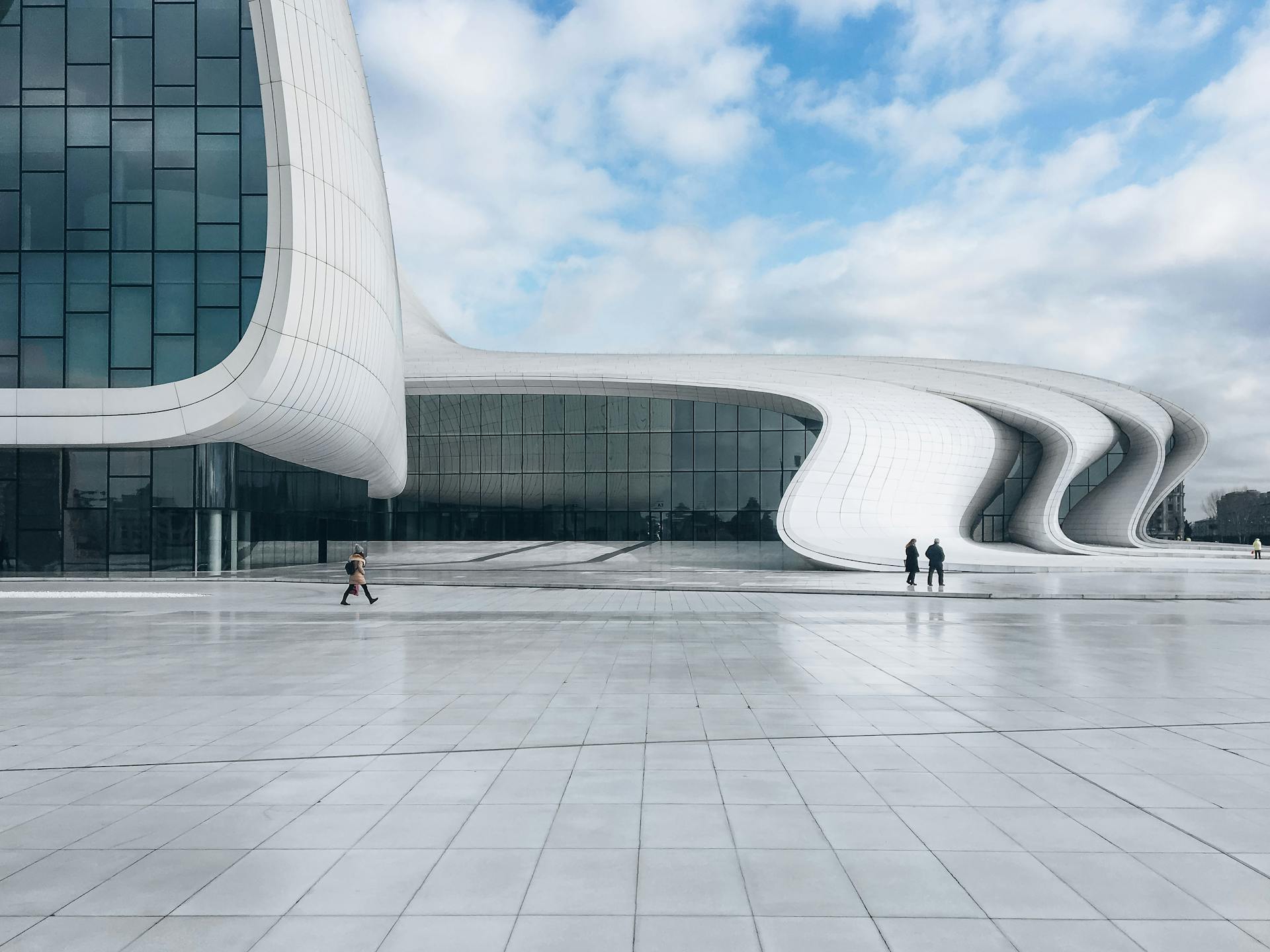
Architecture has always been more than buildings.
A building may be the most visible result of an architect’s work, but it is never isolated. It depends on land, water, energy, labor, materials, financing, codes, transportation, technology, climate, maintenance, and public trust. It affects the people who occupy it, the streets around it, the infrastructure that serves it, and the community that inherits it.
For much of the last century, architecture was often judged by the object: the house, the tower, the school, the museum, the headquarters, the civic building. Form mattered. Material mattered. Space mattered. Those things still matter. They always will.
But the future of architecture will be judged by something larger.
The next generation of architecture will be judged by how buildings perform as part of systems.
A home will not only be shelter. It will be part of an energy system, a water system, a data system, a health system, and a financial system. A neighborhood will not only be a collection of lots. It will be a pattern of mobility, public space, drainage, housing choice, climate risk, local commerce, and social trust. A city will not only be a skyline. It will be a living network of infrastructure, labor, culture, technology, and public responsibility.
This is not an abstract shift. It is already happening.
Architecture is moving from the design of objects to the design of relationships.
Buildings are where systems become personal
Most people do not experience infrastructure as a policy document. They experience it when the power goes out, when the basement floods, when the utility bill rises, when the air feels unhealthy, when the sidewalk disappears, when transit is unreliable, when a home is too hot, too cold, too expensive, or too far from work.
Systems become personal through buildings and places.
Energy policy becomes a monthly bill. Climate policy becomes whether a home can withstand heat, storms, flooding, or fire. Transportation policy becomes the length of a commute. Housing policy becomes whether a family can stay near school, work, or relatives. Public health policy becomes indoor air, daylight, access to parks, safe stairs, walkable streets, and the ability to age in place.
Architecture sits at the point where these systems touch daily life.
That is why the future of the profession cannot be limited to style, image, or surface. The work ahead is deeper. Architects must understand buildings as part of larger civic, environmental, technological, and economic networks.
A beautiful building that fails its users, burdens its infrastructure, wastes energy, ignores risk, or ages poorly is not enough. A modest building that supports health, reduces energy demand, manages water responsibly, adapts over time, and strengthens the public realm may be far more valuable.
The measure of architecture is expanding.
The built environment is one of the great public systems
The built environment is not a background condition. It is one of the largest systems humanity has created.
Buildings and construction consume enormous amounts of energy and materials. The Global Status Report for Buildings and Construction 2024/2025 found that the buildings and construction sector accounted for 32 percent of global energy consumption and 34 percent of global carbon dioxide emissions (UNEP and GlobalABC, 2025). The same report notes the sector’s dependence on materials such as cement and steel, which are major contributors to emissions and construction waste.
These numbers should not be used as a slogan against building. People need homes, schools, hospitals, infrastructure, workplaces, laboratories, factories, and public spaces. The answer is not to stop building. The answer is to build with greater intelligence.
We have to ask better questions.
Can the building use less energy? Can it be electrified? Can it generate or store power? Can it be adapted instead of demolished? Can the structure last longer? Can materials be reused? Can water be managed on site? Can the building remain useful during outages, heat waves, storms, and changing needs? Can it support human well-being rather than simply meet minimum requirements?
These are not only technical questions. They are civic questions.
A society reveals its priorities through what it builds and how it maintains it.
Design excellence now means system performance
The American Institute of Architects’ Framework for Design Excellence defines design excellence through principles that include integration, equitable communities, ecosystems, water, economy, energy, well-being, resources, change, and discovery (AIA, 2026).
That framework is important because it recognizes that good design in the twenty-first century cannot be reduced to appearance. It must consider performance, equity, resources, resilience, health, and long-term value.
This does not diminish architecture. It strengthens it.
The best architecture has always integrated many forms of intelligence: structure, light, proportion, use, climate, craft, economy, context, and meaning. What has changed is the scale and urgency of the systems we now have to coordinate.
Energy grids are changing. Insurance markets are changing. Climate risk is changing. Construction labor is changing. Digital tools are changing. Housing needs are changing. Public expectations are changing. Materials and supply chains are changing.
Architecture must respond not by chasing novelty, but by becoming more competent, more integrated, and more useful.
Design excellence should mean that a building is not only visually compelling, but also durable, efficient, adaptable, healthy, buildable, and responsible to the place it serves.
Technology is expanding the architect’s field of vision
Technology is changing the built environment, but not always in the way people imagine.
The future is not simply about artificial intelligence producing images, robots assembling buildings, or digital twins simulating cities. Those tools matter, and they will grow in importance. But the deeper shift is that technology allows architects, engineers, builders, owners, and public agencies to see relationships that were previously harder to measure.
We can model energy use earlier. We can simulate daylight, heat, comfort, and ventilation. We can understand carbon impacts across a building’s life cycle. We can coordinate complex systems before construction. We can visualize design options for communities. We can monitor performance after occupancy. We can study how buildings interact with infrastructure, mobility, climate, and operations.
The World Economic Forum has argued that the digital transformation of construction depends not only on technology, but also on collaboration, workforce upskilling, and strong data governance (World Economic Forum, 2025). That is the right caution. Technology alone does not reform an industry. It must be connected to people, standards, institutions, and judgment.
The architect of the future should not be replaced by technology. The architect of the future should be enlarged by it.
But that enlargement comes with responsibility.
Technology can help us analyze more. It cannot decide what kind of society we should build. It can optimize systems. It cannot define dignity. It can produce options. It cannot replace civic judgment.
The future needs architects who can use advanced tools without surrendering human responsibility.
Housing is a systems problem
Housing is the clearest example of why architecture must think systemically.
A home is not only a unit. It is part of a land system, a financing system, a permitting system, a labor system, a material system, an energy system, a transportation system, and a community system.
If land is expensive, housing becomes expensive. If permitting is slow, housing becomes more expensive. If infrastructure is weak, housing becomes harder to approve. If insurance rises, housing becomes harder to sustain. If energy costs are high, affordability suffers. If transit is poor, people spend more time and money commuting. If materials are volatile, construction becomes less predictable. If zoning permits only one housing type, communities become less adaptable.
This is why housing cannot be solved by architecture alone. But it also cannot be solved without architectural intelligence.
We need housing that is affordable to build, affordable to operate, durable over time, adaptable to family needs, efficient in energy use, connected to infrastructure, and dignified in daily life. That requires policy, finance, planning, engineering, construction, and design to work together.
The future of housing will not be found in one model. It will require many: single-family homes, accessory units, townhomes, small multifamily, adaptive reuse, mixed-use development, modular construction, high-performance buildings, and larger multifamily housing where infrastructure can support it.
The point is not to impose one form of living. The point is to create a system with enough flexibility to serve real lives.
Mobility is part of architecture
A building’s location is one of its most important design decisions.
Where a building sits determines how people move, what they can reach, how much they must drive, whether children can walk safely, whether seniors remain independent, whether small businesses have customers, and whether households spend more on transportation than they expected.
Transportation and land use cannot be separated.
The Environmental Protection Agency has emphasized that transportation is a key element of smart growth because it can increase access to opportunity, reduce pollution, improve health outcomes, and help communities meet climate goals (EPA, 2026). That is not simply an urban planning statement. It is an architectural one.
A building that forces every daily need into a car trip has a different public consequence than one connected to sidewalks, transit, cycling, schools, shops, parks, and workplaces. A housing development without mobility choices can become less affordable than it appears because transportation costs are simply shifted onto the household.
Architecture must therefore ask not only what happens inside the property line, but what the building makes possible beyond it.
Can residents reach daily needs? Can workers get there? Can deliveries function? Can emergency services access the site? Can children move safely? Can older adults remain connected? Can the project support a public realm rather than turn away from it?
These are design questions.
Water is no longer a background utility
For many years, water was treated as something that entered a building through pipes and left through drains. That view is no longer sufficient.
Flooding, stormwater, drought, aging infrastructure, combined sewer systems, water quality, landscape performance, and groundwater conditions are now central to the future of development.
A site that ignores water may create problems for neighbors, infrastructure, insurers, and future owners. A building that manages water wisely can reduce risk, support landscape health, improve resilience, and lower long-term costs.
Water should be considered early in design, not treated as an engineering afterthought. Grading, drainage, roof design, permeable surfaces, planting, detention, reuse, and infrastructure capacity all shape whether a project contributes to resilience or adds burden.
This is where architecture and civil infrastructure meet.
The future building is not only an object placed on land. It is part of a watershed, a street network, a utility system, and a climate reality.
Energy will redefine the home and the city
Energy is becoming one of the defining architectural issues of the next generation.
Homes and buildings will increasingly need to use less energy, shift demand, integrate with electric vehicles, support heat pumps, accommodate batteries, connect to solar, and operate intelligently with the grid. In some cases, buildings will become producers and managers of energy, not only consumers.
This changes design.
The orientation of a building matters. The envelope matters. Windows matter. Insulation matters. Mechanical systems matter. Roofs matter. Electrical infrastructure matters. Commissioning matters. Maintenance matters. User behavior matters.
A poorly designed building can lock in high energy costs for decades. A well-designed building can reduce demand, improve comfort, and support resilience.
Energy performance is not separate from affordability. A family does not experience housing cost only through rent or mortgage payments. It experiences housing cost through monthly operating costs as well.
The future of architecture must treat energy not as a compliance exercise, but as part of the basic dignity and financial stability of the home.
Resilience is a design responsibility
Resilience is often discussed after disaster. It should be designed before disaster.
A resilient building is not one that merely survives. It is one that remains useful, safe, and recoverable under stress. That stress may come from storms, flooding, heat, wildfire smoke, power outages, supply disruptions, or changing family needs.
Resilience is not only about extreme events. It is about continuity.
Can a building stay habitable during a heat wave? Can a senior safely remain in place? Can critical systems be protected from flooding? Can materials withstand repeated exposure? Can a community recover quickly after disruption? Can the building adapt to new uses rather than become obsolete?
These questions are now central to architecture.
Resilience should not be reserved for special projects or wealthy clients. It should become part of ordinary building culture. The people most exposed to risk are often those with the fewest resources to recover.
A future-ready architecture must therefore connect resilience to equity, affordability, and public safety.
Data is becoming a building material
Data is not a substitute for concrete, steel, wood, brick, glass, or stone. But it is becoming part of how buildings are conceived, delivered, operated, and governed.
A building increasingly produces information: energy use, occupancy patterns, air quality, equipment performance, maintenance needs, water use, carbon impact, and operational costs. That information can help owners manage buildings better, cities plan infrastructure more intelligently, and users understand the environments they occupy.
But data also raises questions.
Who owns it? Who has access to it? How is it protected? How is it used? Does it improve life for occupants, or merely monitor them? Does it help reduce waste, or does it become another layer of complexity?
The future of architecture will require stronger ethical judgment about technology. Smart buildings should not become intrusive buildings. Digital infrastructure should serve human life, not make it more abstract.
A future-ready building must be intelligent, but it must also be trustworthy.
The architect as integrator
The role of the architect is changing because the problem set is changing.
Architects are still responsible for space, form, material, code, context, and the coordination of many disciplines. But increasingly, the architect must also understand energy, resilience, technology, public process, affordability, construction logistics, life-cycle value, and long-term adaptation.
This does not mean the architect must become every specialist. It means the architect must be able to integrate specialists into a coherent whole.
That has always been one of the profession’s highest responsibilities.
The future will require architects who can speak with engineers, builders, policymakers, technologists, financiers, communities, and clients. It will require professionals who can see both the detail and the system. It will require a discipline comfortable with beauty, but not limited to it; fluent in technology, but not seduced by it; grounded in construction, but not trapped by convention.
The architect of the future must be a civic integrator.
Policy must understand buildings as systems
Public policy often treats housing, transportation, energy, water, climate, technology, and economic development as separate departments. In real life, they are connected.
A housing policy that ignores transportation may increase household costs. An energy policy that ignores building envelopes may miss major savings. A climate policy that ignores existing buildings may fail to reduce risk. A technology policy that ignores construction realities may remain theoretical. A zoning policy that ignores infrastructure may create public resistance.
Better policy begins with understanding the built environment as a system.
That does not mean every decision must become more complicated. It means the right people must be at the table earlier, and the consequences must be considered more honestly.
Architects should have a larger role in public leadership because architects are trained to think across scales: detail, room, building, block, neighborhood, city, and environment. That way of thinking is needed now.
The future will reward societies that can coordinate.
A future worth building
The future of architecture is not only technological. It is moral and civic.
We can build places that are more efficient but less humane. We can make buildings smarter but more alienating. We can optimize systems while forgetting the people inside them. We can pursue novelty while neglecting maintenance, affordability, beauty, and trust.
That would be a failure.
The better future is one where technology serves judgment, where policy supports good building, where infrastructure strengthens communities, where homes are affordable to live in and operate, where public spaces restore trust, where buildings endure, and where design helps people live with dignity in a changing world.
Architecture is not just buildings.
It is the organization of shelter, energy, water, mobility, materials, information, memory, and public life into places people can use and care for.
That is a larger responsibility.
It is also a larger opportunity.
If we want communities that can adapt, economies that can compete, families that can thrive, and cities that can endure, we have to design beyond the object.
We have to design the systems that make life possible.
References
American Institute of Architects. AIA Framework for Design Excellence. AIA, 2026.
Environmental Protection Agency. Smart Growth and Transportation. EPA, 2026.
Environmental Protection Agency. About Smart Growth. EPA, 2026.
United Nations Environment Programme and Global Alliance for Buildings and Construction. Global Status Report for Buildings and Construction 2024/2025. UNEP and GlobalABC, 2025.
World Economic Forum. Is Construction Future-Ready? 3 Key Insights on the Sector’s Digital Transformation. World Economic Forum, 2025.
World Economic Forum. AI and Science-Led Design Are Changing the Built Environment. World Economic Forum, 2025.
Other blogs


