AI Will Not Replace Architects. But Architects Who Use AI Well Will Change the Profession.
Every generation of architects has confronted a new tool that promised to change the profession. The drafting table gave way to computer-aided design. Physical models were joined by digital models.
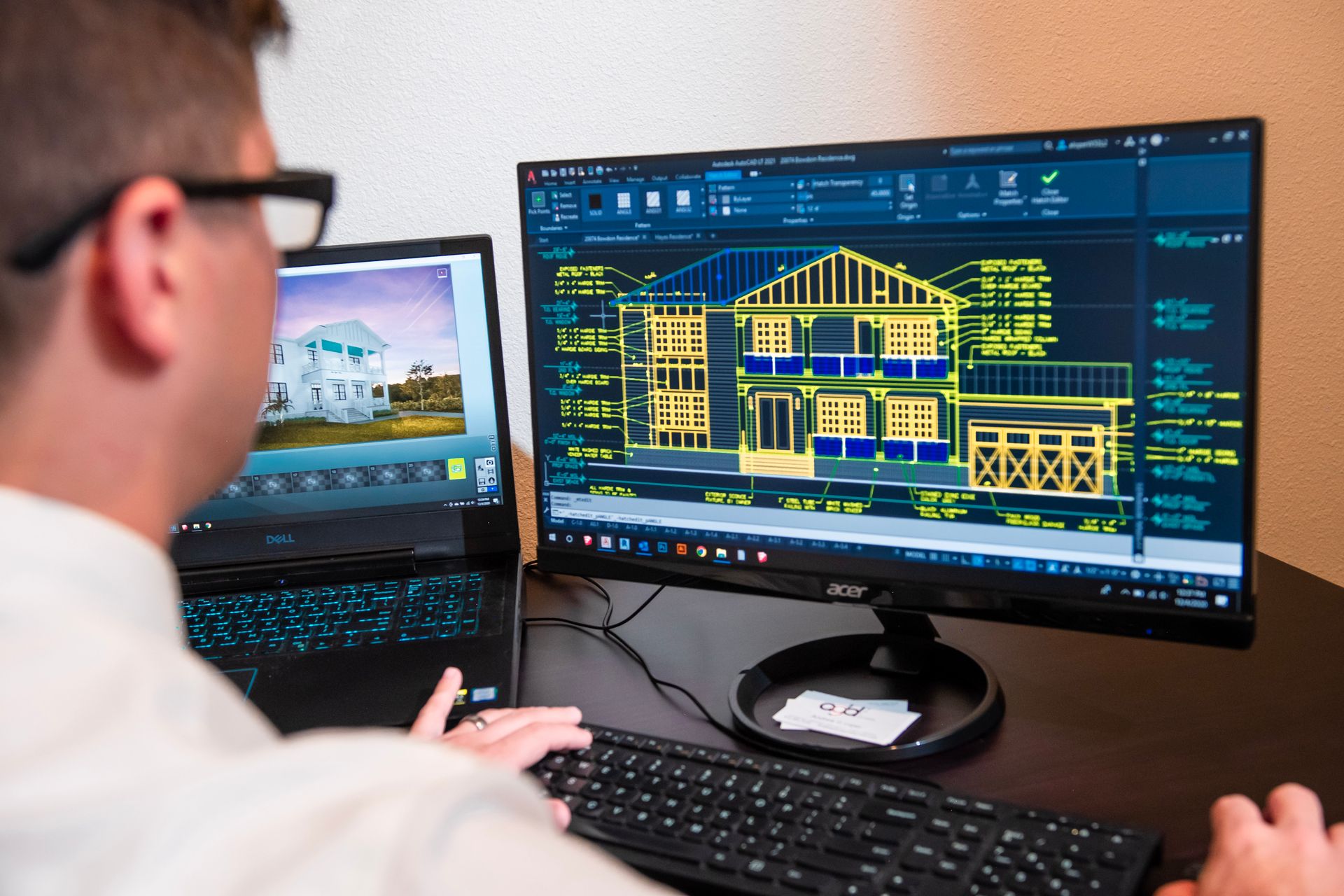
Every generation of architects has confronted a new tool that promised to change the profession.
The drafting table gave way to computer-aided design. Physical models were joined by digital models. Two-dimensional drawings expanded into building information modeling. Rendering became faster. Simulation became more accessible. Coordination became more complex. The tools changed, but the responsibility remained.
Now artificial intelligence has arrived with more speed, more noise, and more confusion than almost any tool before it.
Some people describe AI as if it will replace architects. Others treat it as a novelty for images, presentations, or quick visual studies. Both views are too narrow.
AI will not replace architects. But architects who use AI well will change the profession.
The real question is not whether AI will enter architecture. It already has. The question is whether architects will use it passively or responsibly. Will AI flatten architectural thinking into images and shortcuts, or will it help the profession become more capable, more precise, more responsive, and more useful to the public?
That depends on how we choose to use it.
Architecture is not only image-making
AI entered the public imagination largely through images. Type a prompt, receive a building. Ask for a style, receive a façade. Produce options faster than any human could sketch them.
This has obvious appeal. Architects are visual thinkers. Clients respond to images. Public agencies and communities often understand projects better when they can see them. Early visualization can help explain ideas, test possibilities, and open conversations.
But architecture is not image-making.
A beautiful image does not make a building safe. It does not resolve zoning. It does not coordinate structure. It does not size mechanical systems. It does not understand soil, drainage, fire separation, accessibility, egress, energy code, waterproofing, cost, phasing, maintenance, liability, or the patience required to get a real building through a real process.
Architecture is the discipline of turning intent into buildable, inhabitable, lawful, durable, and meaningful form.
AI can assist that process. It cannot assume the responsibility for it.
This distinction matters. The public may see architecture through images, but the built environment is made through decisions. Many of those decisions are technical, legal, ethical, financial, and civic. They require judgment.
The architect remains responsible
Professional responsibility does not disappear because a tool becomes powerful.
NCARB has stated that regardless of the AI tools used, it remains the architect’s responsibility to provide services in conformance with the standard of care (NCARB, 2024). That principle should guide every discussion about AI in architecture.
An architect cannot outsource judgment to software. A drawing must still be reviewed. A code conclusion must still be checked. A design assumption must still be tested. A specification must still be appropriate. A building must still be safe.
This is not resistance to technology. It is the foundation of public trust.
The public grants architects professional authority because buildings affect life, safety, welfare, money, property, and the environment. If architects use AI, they must understand what it can do, what it cannot do, where it may fail, and how its outputs are verified.
AI can generate. It can summarize. It can compare. It can search patterns. It can help organize information. It can accelerate certain tasks. But it can also fabricate, omit, misinterpret, overgeneralize, and produce confident errors.
That means the architect’s role becomes more important, not less.
The future architect must be able to ask better questions, review outputs critically, and know when the machine is producing something useful and when it is merely producing something plausible.
AI is most valuable where architecture is most complex
The strongest use of AI in architecture may not be producing dramatic images. It may be helping architects manage complexity.
Modern projects require coordination across zoning, building code, energy code, accessibility, structure, mechanical systems, façade performance, waterproofing, cost, schedules, procurement, permitting, sustainability, resilience, operations, and community expectations. Even a modest building can involve dozens of decisions that affect one another.
AI can help architects and project teams see patterns faster.
It can help compare zoning scenarios. It can organize code questions. It can summarize meeting minutes. It can identify conflicts in project requirements. It can support early feasibility studies. It can help generate alternatives for massing, daylight, energy use, unit mix, circulation, or construction sequencing. It can assist with specifications, quality-control checklists, cost narratives, and public presentations.
Used well, AI can reduce friction in the work that surrounds design.
That matters because much of architecture is not the romantic act of sketching a building. It is the disciplined act of coordinating reality.
The public would benefit if architects had better tools to reduce errors, test options earlier, explain tradeoffs more clearly, and move good projects through approval and construction with less waste.
AI should make design more accountable, not less
The danger of AI is not only that it may produce mistakes. The deeper danger is that it may produce a culture of unearned certainty.
A convincing image can hide weak thinking. A fast answer can hide missing context. A polished report can hide shallow analysis. A generated design can appear complete before anyone has asked whether it should exist, whether it can be built, whether it serves people, or whether it belongs in its place.
Architecture must resist that temptation.
AI should not be used to avoid accountability. It should be used to increase it.
A better AI-enabled practice would document assumptions more clearly. It would test options more transparently. It would show clients and communities the consequences of choices. It would help teams compare cost, performance, resilience, energy, carbon, and constructability earlier in the process.
It would make design more rigorous.
The American Institute of Architects’ AI Task Force has emphasized responsible, ethical, and innovative adoption of AI in architecture, including guidance and educational resources for the profession (AIA, 2026). That framing is important. AI is not merely a productivity tool. It is a professional responsibility issue.
If AI allows architects to produce more without thinking more deeply, it will weaken the profession. If it allows architects to think more broadly, coordinate more carefully, and communicate more clearly, it will strengthen it.
The future is not automated design. It is augmented judgment.
There is a difference between automation and augmentation.
Automation replaces a task. Augmentation improves the capacity of a person or team to make better decisions.
Architecture will use both. Some repetitive tasks will be automated. Drafting support, document organization, clash identification, model checking, data extraction, and routine analysis may become faster. That is not a threat by itself. Every profession should welcome tools that reduce repetitive work when they are accurate and responsibly used.
But the deeper value is augmentation.
AI can help architects explore more options at the beginning of a project. It can support research into precedents, codes, materials, and environmental conditions. It can help translate complex tradeoffs into language clients and communities can understand. It can allow smaller practices to access analytical capacity that was once available mainly to large firms.
That last point matters.
If used well, AI could help democratize certain forms of professional intelligence. A small architecture office may be able to produce stronger feasibility studies, better visualization, deeper research, more coordinated documentation, and clearer public communication. That could be good for clients, homeowners, small builders, and communities.
But access to tools is not the same as wisdom.
The future of architecture should not be a race to produce more content. It should be a discipline of better judgment.
AI can help the public understand buildings before they are built
One of the most promising uses of AI is public communication.
Communities often resist projects they do not understand. Sometimes they are right to be skeptical. Sometimes they are reacting to fear, misinformation, or prior experience with bad development. In either case, better communication matters.
AI-assisted visualization, simulation, and scenario planning can help show what a project may mean before decisions are final. It can help explain massing, shadow, traffic assumptions, housing types, flood risk, energy use, material choices, and public-realm improvements in plain language.
This could improve public process.
A resident should not need to be an architect, planner, or lawyer to understand what is being proposed. A homeowner should not need to decode a zoning chart to understand what can be built. A community board should not have to make decisions with unclear drawings and incomplete explanations.
AI can help translate complexity.
But again, translation must be honest. Tools should not be used to make projects look better than they are. They should be used to make tradeoffs visible. Public trust depends on showing both benefits and impacts.
The most ethical use of AI in public process may be to make decisions less mysterious.
AI and construction must meet the field
Architecture does not end at the screen.
Every building must eventually meet the field: weather, labor, materials, tolerances, sequencing, inspections, coordination, substitutions, delays, and the thousand small decisions that determine whether design intent survives construction.
AI will be useful only if it respects that reality.
There is a growing conversation about AI, robotics, and digital transformation in architecture, engineering, and construction. The World Economic Forum has noted that AI and science-led design may change how buildings are designed, operated, and connected to wider urban systems (World Economic Forum, 2025). Autodesk’s 2025 State of Design & Make report also identifies digital transformation as an important source of resilience for design and construction industries facing uncertainty (Autodesk, 2025).
But digital transformation cannot remain separate from construction culture.
If AI tools are built for presentation but not buildability, they will disappoint. If they generate forms that ignore budgets, trades, codes, or maintenance, they will produce waste. If they accelerate design without improving coordination, they may only move problems faster.
The best AI tools for architecture will be grounded in construction reality. They will help teams coordinate, document, estimate, schedule, procure, and build with greater clarity.
The future will not belong to the architect who produces the most images. It will belong to the architect who can connect design intelligence to delivery.
Ethics must come before efficiency
AI raises ethical questions that architecture cannot avoid.
What data was used to train the model? Are copyrighted works being absorbed without consent? Are cultural forms being copied without understanding? Are biases being repeated? Are unsafe assumptions being hidden? Is client data protected? Are building users being monitored? Who is responsible when AI contributes to an error?
A systematic review of AI and robotics ethics in architecture, engineering, and construction identified concerns including job security, data privacy, security, transparency, decision-making conflict, trust, reliability, safety, surveillance, and liability (Liang et al., 2023).
These are not minor issues. They go to the heart of professional practice.
Architecture is not just an industry. It is a licensed profession tied to public welfare. The ethical threshold should be higher than convenience.
Firms using AI should establish policies for review, confidentiality, attribution, quality control, client disclosure, and responsible use. Schools of architecture should teach AI not only as a tool, but as part of professional judgment. Public agencies should understand both the opportunities and risks of AI-generated materials in submissions and reviews.
Efficiency is valuable. But efficiency without ethics is not progress.
AI may change architectural education
Architectural education will have to change.
Students entering the profession will work with tools that can generate images, analyze options, summarize information, draft narratives, and assist with technical studies. Teaching them to avoid AI entirely would be unrealistic. Teaching them to depend on it uncritically would be irresponsible.
The deeper task is to teach judgment.
Students must still learn how buildings stand up, how water moves, how people occupy space, how materials weather, how codes protect life safety, how cities grow, how drawings communicate, and how design choices affect human experience. They must still sketch, think, visit buildings, study precedent, understand construction, and learn from failure.
AI can expand learning, but it cannot replace the formation of architectural judgment.
A student who uses AI to avoid thinking will become weaker. A student who uses AI to ask better questions may become stronger.
The same is true for the profession.
The architect’s value will become clearer
There is a fear that AI will make architects less valuable.
I think the opposite may happen, but only for architects who understand what their value truly is.
If an architect’s value is only producing images, AI will compete aggressively. If an architect’s value is only drafting routine information, automation will reduce that advantage. If an architect’s value is style alone, the market will become crowded with imitation.
But if an architect’s value is judgment, integration, public responsibility, construction knowledge, design intelligence, and the ability to translate complex needs into durable places, then AI makes that value more visible.
The profession should not defend itself by pretending tools do not matter. It should defend itself by showing what tools cannot replace.
AI cannot walk a site and fully understand its civic meaning. It cannot feel the difference between a room that technically works and one that gives dignity. It cannot carry legal responsibility for life safety. It cannot build trust with a community. It cannot stand in a construction meeting and reconcile design intent with field conditions, budget pressure, and code obligations. It cannot decide what kind of future a society should build.
Those responsibilities remain human.
A better profession is possible
AI gives architecture a choice.
It can become a profession of faster images, thinner judgment, and more disposable content. Or it can become a profession with stronger analysis, clearer communication, better coordination, and deeper public value.
The first path is easier. The second is worth taking.
Used responsibly, AI can help architects spend less time on repetitive work and more time on the decisions that matter. It can help us test performance earlier, coordinate teams better, communicate with the public more clearly, and make design more accountable. It can help small practices become more capable. It can help clients understand complexity. It can help cities evaluate options before committing to mistakes.
But it will not do this automatically.
The future of architecture will not be determined by AI alone. It will be determined by the standards architects bring to it.
We should welcome better tools. We should also insist on better judgment.
Architecture has always absorbed technology. The pencil, the model, the drawing, the computer, the rendering, the building information model — each changed the work. None removed the need for responsibility.
AI is no different in that sense. It is more powerful, faster, and more disruptive. But the central question remains the same:
Can we use the tools of our time to build places worthy of human life?
That is the work.
References
American Institute of Architects. AI Task Force. AIA, 2026.
American Institute of Architects. Architects and AI: Practical Guidance for a Changing Profession. AIA, 2026.
Autodesk. State of Design & Make Report 2025. Autodesk, 2025.
Liang, Ci-Jyun, Thai-Hoa Le, Youngjib Ham, Bharadwaj R. K. Mantha, Marvin H. Cheng, and Jacob J. Lin. Ethics of Artificial Intelligence and Robotics in the Architecture, Engineering, and Construction Industry. Automation in Construction / arXiv preprint, 2023.
National Council of Architectural Registration Boards. NCARB’s Position on the Use of Artificial Intelligence in the Practice of Architecture. NCARB, 2024.
World Economic Forum. AI and Science-Led Design Are Changing the Built Environment. World Economic Forum, 2025.
World Economic Forum. Three Key Insights on the Digital Transformation of Construction. World Economic Forum, 2025.
Other blogs


